

The Aputure STORM 1200x is a 1200W-class tunable white production fixture aimed at narrative cinema, commercial production, broadcast, and rental-house inventory — the working end of the LED daylight market where ARRI SkyPanel S60-C, ARRI M-series HMI, and similar fixtures have historically lived. It is not a creator light, not a first-time purchase, and not a fixture you buy to “have a big light around” — it is a working production tool that earns its place by handling the lighting jobs smaller fixtures can no longer cover.
Ready to buy? The Aputure STORM 1200x is available to purchase online or in store at our Vancouver shop. You can test it in store before you buy. We can set it up and offer a quick introduction and demo for you. The rest of this guide covers who actually needs this much light.
It is built around Aputure's BLAIR light engine (Blue/Lime/Amber/Indigo/Red — a 5-diode chipset engineered for high-output tunable white) with three generational upgrades that matter to working DPs and gaffers: a ProLock Locking Bowens Mount that holds heavy modifiers without rotation drift, head-to-toe IP65 weather resistance (lamp head, control box, and cabling), and a CRMX wireless DMX receiver built into the fixture for direct integration with console-controlled lighting environments. As a useful secondary capability — not a primary reason to buy — the BLAIR engine can output saturated colour across more than 70% of the Rec. 2020 colour gamut via Limited HSIC+ and x,y control modes, useful for occasional sodium-vapor washes, sunset fills, or motivated colour without breaking out gels.
This guide covers what working production crews actually need to know: where the STORM 1200x sits against the STORM 700x and STORM 1000c (its two closest cross-shop targets), how to plan power and rigging for a 1550W max draw, what CRMX integration means for console workflows, what the rental ROI math looks like, and — because flagship-tier readers don't believe “perfect product” narratives — where the STORM 1200x genuinely falls short against ARRI M40/M18 HMI fixtures or ETC Source Four LED Series 3 in ellipsoidal work. If you've already decided you need a 1200W-class LED, this guide is built to help you decide whether it should be this one.
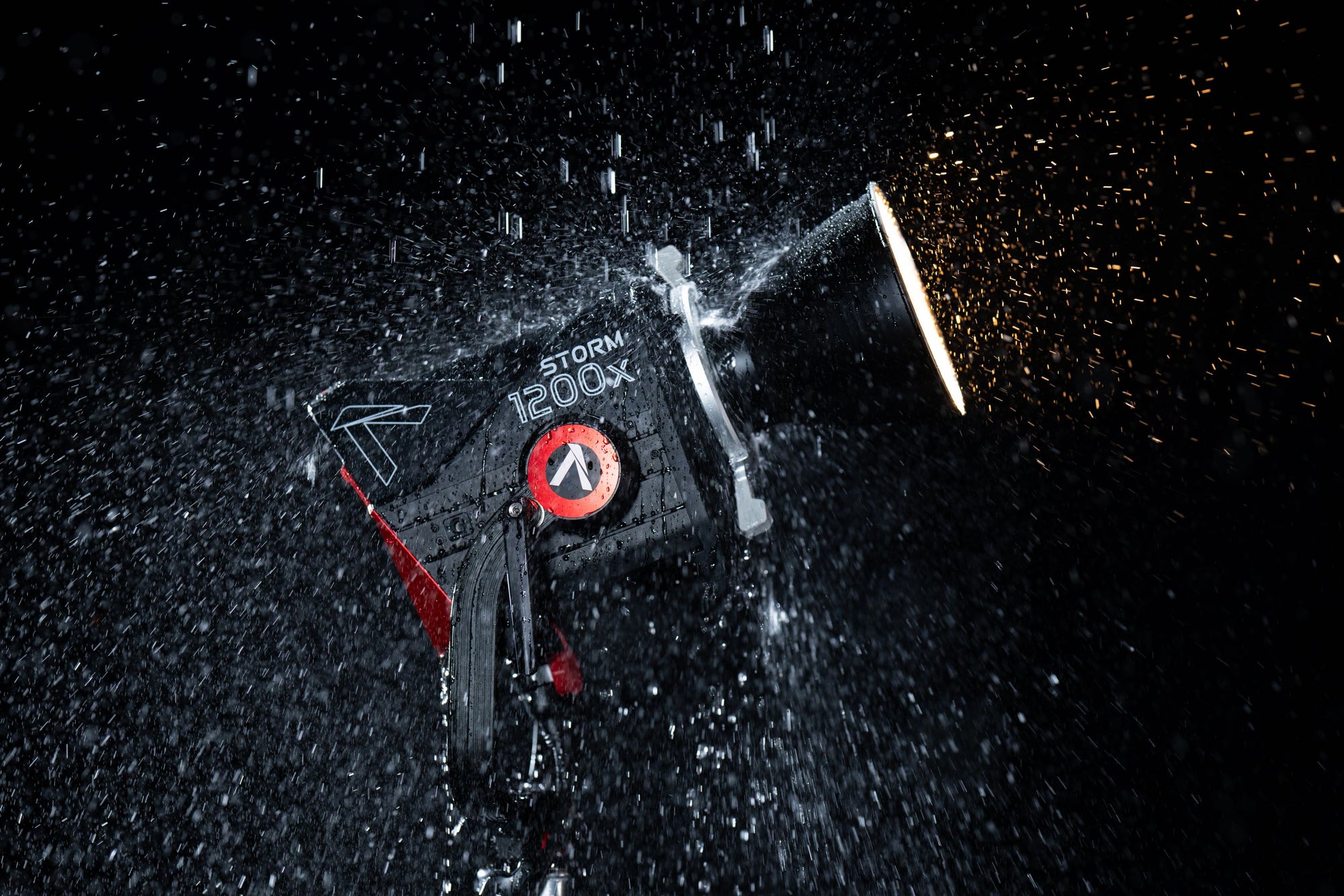
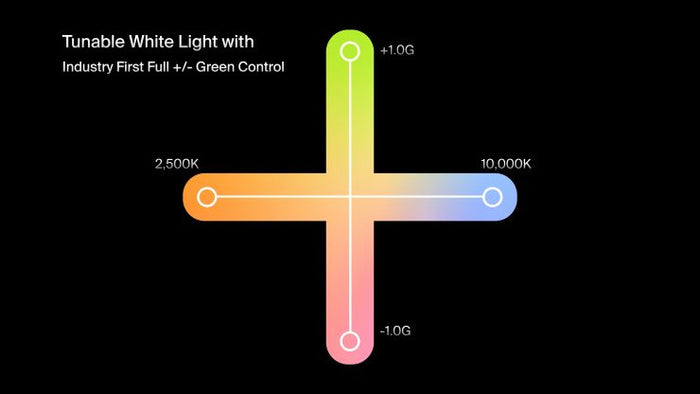
Table of Contents
- What Is the Aputure STORM 1200x?
- Power & Cooling: What You Need to Know Before Buying
- CRMX & Wireless DMX: Why Console-Integrated Crews Care
- Modifier Weight, Stand Safety & Rigging
- Who Is the STORM 1200x For?
- Who Does Not Need the STORM 1200x?
- Best Use Cases for the STORM 1200x
- STORM 1200x vs STORM 700x
- STORM 1200x vs STORM 1000c — The Same-Price Twin Decision
- STORM 1200x vs STORM 1200x Cine Kit
- What Modifiers Should You Use?
- Rental Houses: ROI Model with Real Numbers
- Where the STORM 1200x Falls Short
- Is the STORM 1200x Too Much for Small Productions?
- Is the Aputure STORM 1200x Worth It?
- Recommended STORM 1200x Setups
- Where to Buy the Aputure STORM 1200x in Canada
- FAQ
- Final Verdict
What Is the Aputure STORM 1200x?
The Aputure STORM 1200x is a 1200W-class tunable white LED fixture designed for high-output production lighting. It is part of Aputure's STORM family and is built for filmmakers, commercial crews, studios, and production teams that need a powerful white-light source with professional control.
Unlike smaller creator lights, the STORM 1200x is meant to be used with larger lighting setups. It can be pushed through diffusion, bounced into large surfaces, shaped with Fresnel and barndoors, or used as a strong key source in studio and location environments. With the included 45° Hyper Reflector, Aputure rates it at over 22,000 lux at 3 metres at 5600K — output Aputure also notes can rival or exceed the daylight-only LS 1200d Pro at 5600K, thanks to the BLAIR engine's lime emitter contributing to higher brightness per watt.
In the Aputure STORM lineup, the positioning is fairly clear:
- STORM 80c: 80W full-colour compact point source for creators, tabletop work, and small setups (BLAIR-CG)
- STORM 400x: 400W tunable white key light for interviews, corporate video, and small-to-mid productions (BLAIR)
- STORM 700x: 700W tunable white point source — the closest size step down from the 1200x (BLAIR)
- STORM 1000c: 1000W full-colour point source — closely related STORM-series fixture, BLAIR-CG, full colour (90%+ Rec. 2020)
- STORM 1200x: 1200W high-output tunable white fixture for larger productions, big diffusion, bounce lighting, studio work, and serious location setups (BLAIR)
If the STORM 700x is the portable upper-mid option, the STORM 1200x is the higher-output tool for crews that need more power and more lighting headroom. And if your work is primarily colour-led rather than white-led, the STORM 1000c is the closely related STORM-series fixture worth comparing against directly.
Power & Cooling: What You Need to Know Before Buying
A 1200W LED fixture is not a plug-it-in-anywhere light. Power planning is a real purchase decision for working productions, and underestimating it on day one is one of the most common reasons a fixture this size sits unused.
Actual Power Draw vs Rated Output
The “1200” in the name is the maximum light output rating. The actual electrical draw at maximum output is 1550W (per Aputure's official spec). That gap matters when planning circuit capacity, generator load, and battery configuration — and at roughly 1.29× the output rating, the 1200x's output-to-draw ratio is slightly heavier than the STORM 400x's 400W output / 500W draw (1.25×), meaning the 1200x needs a touch more electrical headroom proportionally.
Power Options
| Source | When it works | When it doesn't |
|---|---|---|
| AC (100-240V, 50-60Hz universal) | Studio, controlled location, any job with reliable mains | Without genny or proper power infrastructure |
| Dual V-Mount (14.4V) | Short cordless bursts at reduced output; setup and check shots | Sustained max output — 1550W draw will exceed sustained capacity of most 14.4V V-Mount pairs |
| Gold Mount block batteries (Bebob Cube, IDX EC-H580/680, ~28V block) | Sustained high-output cordless work where the kit is already standardised on block-battery infrastructure | Crews that don't already run block batteries — block-battery investment is a meaningful additional cost |
| High-output 28V/26V cinema battery systems | Long-form cordless at sustained high output | Anything outside an ENG/cinema-grade power kit |
For most rental and small-production buyers, the practical reality is: AC is the primary power source for the STORM 1200x; cordless operation is a supplemental capability, not a default. Plan around that.
North American 20A Circuit Planning
In North America, a standard 120V / 20A circuit provides up to 2,400W. A STORM 1200x at maximum draw (1,550W) leaves roughly 850W of headroom — enough for the fixture and small accessories, but not enough to share with another 1200W-class fixture, a craft service kettle, or any other significant draw. Plan one 20A circuit per STORM 1200x at max output, and verify your stinger and tie-in chain accordingly. If your location has only 15A circuits (1,800W max), the 1200x at max draw will load that circuit to roughly 86% — workable but cutting close, and you should not share that circuit with anything else.
240V Markets
In 240V markets (Europe, Asia-Pacific, UK), a standard 16A circuit at 240V provides 3,840W — significantly more headroom for a single 1200x and additional fixtures. The same fixture loads only ~40% of a 240V/16A circuit at max draw. Multi-fixture runs are much easier to power in 240V regions; this is one reason European rental houses are sometimes more comfortable spec'ing multi-STORM-1200x packages on the same circuit than their North American counterparts.
Cooling and Fan Noise
The STORM 1200x uses an active-cooled lamp head with five fan modes. Per Aputure's official spec sheet, measured at 1m:
| Mode | Lamp Head Fan Noise | Behaviour |
|---|---|---|
| Silent | 0 dBA | Fan off — for sit-down interviews, dialogue, mic'd subjects. Output is thermally capped in this mode |
| Low | 31 dBA | Quiet operation, modest cooling headroom |
| Medium | 34.4 dBA | Standard cooling for typical sustained-output work |
| High | 43 dBA | Higher airflow when sustained max output is needed in warm environments |
| Smart | 52 dBA (peak) | Dynamic auto-adjust based on ambient temperature; can rise to 52 dBA when managing thermal load aggressively, so this is not a quiet-set mode |
A separately rated Control Box maximum noise level of 28.5 dBA across all modes also matters on quiet sets — the control box can be positioned off-stage if needed, but it is not silent.
Practical takeaway: Silent Mode at 0 dBA is the mode that lets a 1200W LED sit close to mic'd talent on a sync-sound shoot, with the understanding that output will be capped to manage thermal load. Smart Mode is the right choice for sustained max-output work outdoors or in non-sync environments, even though it is the loudest of the five modes — it prioritises maintained output over silence. Plan your fan-mode selection around what the take actually needs, not the default.
Sustained Max Output and Thermal Throttling
Any LED at this power class manages thermal load, and the STORM 1200x is no exception. For sustained high-output work in hot environments, expect the fixture to manage fan and (if necessary) output to stay within thermal limits — this is engineering reality, not a defect. Crews running multi-hour sustained-max takes outdoors in summer heat should plan for it. AC power, proper ventilation around the lamp head, and use of the appropriate fan mode are the practical mitigations.
CRMX & Wireless DMX: Why Console-Integrated Lighting Crews Care
CRMX is one of the technical specs that working gaffers and lighting designers actively search for — not because the acronym is exciting, but because it determines whether the fixture can be folded into a serious lighting workflow without external hardware.
What CRMX Is
CRMX (Cinema Radio Multiplex) is LumenRadio's wireless DMX protocol, and it has effectively become the cinema lighting industry's wireless control standard. Most cinema-grade LED and HMI fixtures used on professional sets are CRMX-compatible, either natively or via add-on transceivers. Console-based lighting workflows — running boards like grandMA, ETC Eos, ChamSys MagicQ, or Avolites — depend on it.
Why a Built-In CRMX Receiver Matters
Some fixtures are CRMX-compatible only via an add-on TimoTwo dongle or CRMX adapter accessory — additional hardware, additional points of failure, additional rental-day cost. The STORM 1200x has a built-in LumenRadio CRMX (TimoTwo) receiver as standard. For working productions and rental houses, that means:
- No external dongle required to add the fixture to a CRMX wireless universe
- Direct integration with grandMA, ETC Eos, ChamSys, Avolites and similar consoles that have CRMX transmitters in their infrastructure
- Drop-in to existing CRMX wireless universes on set without rewiring or addressing additional hardware
- Reduced setup time on console-controlled jobs — gaffer addresses the fixture once, then runs everything from the board
Wireless Range and Topology
The STORM 1200x's CRMX range is rated at ≤100m / ≤262.5 ft (per Aputure's official spec), which covers most studio floors, large location interiors, and outdoor commercial sets. For larger venues or multi-room productions, CRMX repeaters and bridges are available in the LumenRadio ecosystem to extend coverage.
In addition to CRMX, the 1200x supports:
- Sidus Bluetooth Mesh (≤100m / ≤262.5 ft) for Aputure-app-based control of multi-fixture STORM kits without a board
- 5-pin DMX in/out with RDM, for traditional wired console workflows
- 2× LAN ports for sACN / Art-Net network workflows in installation-grade or larger lighting environments
- Sidus Link Pro Auto-Patching and Auto-Configuration — automatic fixture detection and addressing when integrating into supported Sidus Link Pro environments
Practical Implication for Working Crews
For a single-camera commercial shoot with 8-12 STORM-series fixtures across the set — keys, fills, backgrounds, practicals — one lighting designer can address the entire array from a console at the front of house, change cues between takes without anyone touching a fixture, and run multi-fixture chase or fade programs synchronously. This is the workflow that justifies the price tag. Pro lighting crews don't pay for output alone — they pay for output that integrates cleanly into the rest of the rig.
Modifier Weight, Stand Safety & Rigging
For gaffers and rental houses, the STORM 1200x is also a physical problem: it is a heavy fixture, and pairing it with large modifiers raises real load and safety considerations. This is the section most consumer buying guides skip.
Fixture Weight
The STORM 1200x lamp head with yoke weighs approximately 9.5 kg / 21 lbs (verify exact current figures against Aputure's spec sheet at purchase). The control box is separate and stand-mounted independently. The fixture is heavier than the STORM 700x and significantly heavier than the STORM 400x.
Modifier Weight Stack-Up
A typical “1200x with large soft source” deployment carries these payloads on the front of the fixture:
- Light Dome SE / III (or equivalent large softbox): approximately 2-4 kg
- CF12 Fresnel + CF12 Barn Doors: add additional front weight
- Large lantern or 5'+ octa: can exceed 5 kg
- Spotlight Max with lens kit: substantial added weight forward of the mount
Total lamp-head-plus-modifier load on the yoke and stand can reach 13-15 kg / 28-33 lbs depending on the modifier choice. Plan rigging accordingly.
Stand Requirements
A standard heavy-duty C-stand with high-density stand base can handle a STORM 400x with modest modifiers, but for the STORM 1200x with a large soft source, junior stand / combo stand territory is the safer baseline. Specific stand requirements depend on your modifier choice and rigging angle (vertical vs cantilevered). For overhead positions, fly-rated rigging hardware appropriate to the total payload is required, not optional.
Counterweight and Sandbagging
Cantilevered or arm-extended positions multiply the effective load at the stand base. For typical “stand with arm” extensions of 600-1000 mm with a 1200x + softbox, counterweight in the 25-40 lb range at the stand base is a working baseline — verify against your specific rigging geometry and stand manufacturer's load chart.
ProLock Locking Force vs Heavy Modifiers
The ProLock Locking Bowens Mount is one of the meaningful upgrades on the 1200x for heavy-modifier work. A standard Bowens spring-detent mount can release under sustained load or in wind; the ProLock's screw-down outer ring mechanically locks the modifier in place. For 5+ kg modifiers (large softboxes, lanterns, fresnels, Spotlight Max), this is the practical difference between a stable rig and a slow-rotation-drift problem mid-take.
Safety Cable Practice
Any overhead fixture — and any cantilevered fixture above eye height — should have a safety cable rated above the total payload, attached to a structural anchor independent of the primary rigging. ProLock or any other mount is not a substitute for a safety cable. This is standard production practice, not paranoia.
Wrap-Out Time
The STORM 1200x is a multi-piece fixture: lamp head with yoke + control box + head cable + AC cable + modifier + reflector / Fresnel + clamps. Working wrap-out time is typically 5-8 minutes per fixture from “lit and operating” to “in the case,” depending on rigging height and crew familiarity. Plan turnaround between setups accordingly — this is not a “grab and go” light.
Who Is the Aputure STORM 1200x For?
The STORM 1200x makes the most sense for buyers who already know why they need more output. It is not usually a first light for beginners. It is a production tool for people who are regularly running into the limits of smaller fixtures.
Commercial Production Teams
Commercial production teams are one of the clearest fits for the STORM 1200x. Brand films, agency shoots, product commercials, corporate campaigns, and studio productions often require a strong, repeatable key source that can be shaped in multiple ways.
In these environments, the value of the STORM 1200x is not just brightness. It is the ability to maintain enough output after adding diffusion, bounce, distance, or modifiers. Smaller lights can look good in close setups, but they may struggle when the lighting plan becomes larger and more controlled.
Film Crews and Cinematographers
For cinematographers and film crews, the STORM 1200x is useful when you need a large soft source, strong directional light, or a powerful fixture that can work in more demanding environments. It can be used for narrative interiors, documentary setups, high-end interviews, controlled location work, and larger scenes where a smaller fixture would not provide enough output.
If your lighting plan often involves pushing light through large diffusion frames, bouncing into ceilings or walls, or creating a more natural large-source look, the STORM 1200x is much more appropriate than a compact creator light.
Studio and Rental-Style Setups
Studios, production houses, and rental-style workflows can benefit from owning a high-output fixture that can serve many roles. The STORM 1200x can be used as a large key light, a bounced source, a window-style daylight source, a powerful controlled light with Fresnel and barndoors, or — paired with the Spotlight Max — as a Leko-style projection fixture.
For a studio that works with different clients and different production needs, the STORM 1200x can become a core fixture rather than a specialty light.
Crews That Already Own Smaller Aputure Lights
The STORM 1200x also makes sense for crews that already own smaller Aputure lights such as the MC Pro, MT Pro, STORM 80c, STORM 400x, or STORM 700x, but now need a stronger main source.
In that kind of kit, the STORM 1200x can handle the heavy lifting as the main light, while smaller fixtures handle background colour, practicals, edge lights, accents, or hidden lighting on set.
Who Does Not Need the STORM 1200x?
The STORM 1200x is powerful, but that does not automatically make it the best choice for every buyer. In many smaller setups, a more compact Aputure fixture will be easier to use, easier to rig, and more cost-effective.
Solo Creators in Small Rooms
If you are a solo YouTuber, streamer, podcaster, or creator working in a small room, the STORM 1200x is probably overkill. You will likely get better value from a smaller, easier-to-place light such as the STORM 80c, especially if you also want full-colour creative lighting. For small creator spaces, the priority is usually speed, simplicity, and visual polish — not maximum output.
Small Interview Shooters
If you mainly shoot simple corporate interviews, podcasts, or talking-head videos in controlled indoor spaces, the STORM 400x or STORM 700x may be the more practical choice. They give you a real production key light without the size, power, rigging, and workflow demands of a 1200W-class fixture. The STORM 1200x makes more sense when you need larger diffusion, more distance, bigger rooms, or a more demanding commercial setup.
Product Videographers in Small Studios
For tabletop product videos, tech reviews, small commercial product shots, and compact studio setups, the STORM 1200x is usually too much light. Product videographers often benefit more from a controllable compact source, plus smaller accent lights for reflections and edges. For that kind of work, a STORM 80c with MT Pro, MC Pro, or INFINIBAR accents may be a smarter and more flexible setup.
Buyers Who Need Full Colour Rather than White
If your primary need is saturated colour work — music videos, stylized commercials, colour-led narrative — the STORM 1200x is the wrong fixture even if you need this much output. The colour-led equivalent in the STORM lineup is the STORM 1000c, which uses the BLAIR-CG engine for 90%+ Rec. 2020 coverage and a 1,800K–20,000K CCT range. See the comparison section below.
Best Use Cases for the Aputure STORM 1200x
The STORM 1200x is best when you need power, distance, and flexibility. It is a light for larger lighting plans, not just close-range creator setups.
Large Soft Key Light
One of the strongest uses for the STORM 1200x is creating a large soft key light. When you push light through large diffusion or bounce it into a big surface, you lose output. A high-output fixture gives you more room to create soft, flattering light without running out of brightness. This is useful for commercial interviews, beauty work, brand films, documentary setups, and studio production.
Daylight-Style Location Work
The STORM 1200x is useful for location work where you need a strong daylight-style source. It can help create motivated window light, add controlled fill, or support scenes where smaller fixtures do not have enough output. The IP65 build across head, control box, and cabling also means you do not need to break out a rain cover for damp or weather-exposed exteriors. It should not be treated as a magic solution for every outdoor problem, but it gives crews far more headroom than smaller fixtures when working in challenging locations.
Studio Commercial Production
For studio commercial work, the STORM 1200x is valuable because it can be used in many different lighting approaches. It can be softened, bounced, focused, or shaped depending on the production style. For teams shooting products, people, branded content, and commercial video, a high-output bi-color fixture can save time and make the lighting plan more adaptable.
Documentary and Interview Sets
High-end documentary and interview sets often use larger sources for a softer, more natural look. The STORM 1200x is useful when you need to light a larger room, create a big soft source, or keep the light farther from the subject while still maintaining exposure. For single-person interviews in small spaces, the STORM 400x or STORM 700x may be enough. But for larger rooms or more polished commercial interview setups, the 1200x gives more flexibility.
Bounce and Diffusion Setups
Bounce lighting and diffusion are where high-output fixtures become especially useful. Once you bounce a light into a wall, ceiling, foam board, or large frame, the usable output drops. The STORM 1200x gives crews the power to use these techniques without immediately running out of light. This makes it useful for cinematographers who prefer naturalistic, soft, and indirect lighting setups.
Spotlight / Beam Projection Work (with Spotlight Max)
Aputure officially confirms compatibility between the STORM 1200x and the Spotlight Max beam projector — so the same fixture that lit your soft key can be reconfigured into a Leko-style ellipsoidal spotlight for gobo projection, hard cuts, and theatrical/stage-quality beam shaping. With the 19° or 36° lens kit (and the optional 10-piece Gobo Kit), the STORM 1200x + Spotlight Max combination is a serious alternative to traditional Joker/Leko-class spotlight fixtures at a fraction of the cost.
Occasional Saturated Colour Effects
Via Limited HSIC+ and x,y control modes, the BLAIR engine in the STORM 1200x can also output saturated colour effects across more than 70% of the Rec. 2020 colour gamut — sunsets, sodium-vapor ambers, motivated colour washes, stylized commercial fills — without gels. This is a bonus capability rather than the headline use case (the 1200x is fundamentally a tunable white fixture), but it is genuinely useful when a shot calls for one motivated colour moment without needing a dedicated RGB fixture.
Aputure STORM 1200x vs STORM 700x: Which One Should You Buy?
The STORM 700x is the closest size-step down from the 1200x within the BLAIR tunable white series — and for many buyers, the right question is whether the extra output of the 1200x is worth the extra weight, power draw, and cost.
Both share the same fundamentals: BLAIR 5-diode engine, 2,500K–10,000K CCT, ±G 100% MITC, 70% Rec. 2020 via HSIC+/x,y, ProLock Locking Bowens Mount, IP65 weather resistance, Sidus Mesh + CRMX + DMX control.
Choose the STORM 700x if:
- You want to mount on a baby pin stand (the 700x lamp head weighs 5.15 kg)
- You frequently move locations, shoot ENG/documentary style, or work as a single-operator key
- You need strong daylight output but not 1200W of it (the 700x delivers 18,670 lux @ 3m with included reflector, ~3× brighter than the LS 600x Pro it effectively replaces)
- Budget is a factor — the 700x sits at a noticeably lower price point than the 1200x
Choose the STORM 1200x if:
- You regularly need to overpower direct sun or push through large diffusion frames
- Your work involves bigger sets, larger soft sources, and bounce setups that eat output
- You shoot studio commercial work where output headroom matters more than portability
- Junior-stand-and-up rigging is already part of your kit
- You want CF12 Fresnel + Spotlight Max compatibility for spotlight-class beam work
For a lot of cinematographers and gaffers, owning one 1200x for the heavy key work plus one or two 700x for fill, accent, and location runs is a common kit composition.
Aputure STORM 1200x vs STORM 1000c: The Same-Price Twin Decision
This is the most important comparison in the STORM lineup right now — and it is the one most often missed in older buying guides. In February 2026, Aputure significantly reduced the STORM 1000c price, putting it much closer to the STORM 1200x than it was at launch. That means buyers are increasingly choosing between them not on price difference, but on which kind of light their work actually needs.
This is not a “which one is better” decision. Both are flagship STORM-series fixtures with identical rigging, ProLock mount, IP65 build, and CRMX integration. The honest framing is: which fixture matches your work.
Persona-Based Self-Select Matrix
| Dimension | STORM 1200x (Bi-Color) | STORM 1000c (Full-Color) |
|---|---|---|
| Light engine | BLAIR (5-diode: B/L/A/I/R) | BLAIR-CG (7-diode: B/L/A/I/R + Cyan + Green) |
| Hero feature | Maximum tunable white output + accurate CCT control across 2,500K-10,000K | Full RGB flexibility + BLAIR-CG saturated colour across 1,800K-20,000K |
| Best suited to | Narrative key lighting / high-output white work / high-end commercial / daylight battles | Music video / stylized commercial / creative colour work / wide-CCT studio work |
| What it sacrifices | True saturated RGB (only ~70% Rec. 2020 via Limited HSIC+ / x,y) | Peak white-light output drops when running full-saturation colour modes |
| The DP who picks it | The precision-first DP who needs accurate, repeatable white-light delivery — interview keys, beauty, commercial product, narrative naturalism | The creative-first DP who wants colour as a primary tool — MV colour washes, motivated practicals, stylized commercial palettes |
| The rental house perspective | Serves high-end commercial / narrative / broadcast / corporate clients who book on output and accuracy | Serves MV crews / creative agencies / stylized-commercial clients who book on colour capability |
| Output @ 3m (5600K, included reflector) | >22,000 lux | ~14,200 lux |
| Max output / consumption | 1200W / 1550W | 1000W / 1440W (verify against current 1000c spec) |
How to Actually Pick
The wrong way to make this decision is to ask “which has better specs.” Both have professional-grade specs aimed at different jobs. The right question is: what does your booking calendar look like?
- If three quarters of your recent shoots have been corporate, commercial, narrative, broadcast, or daylight-led location work — the 1200x matches that workload
- If three quarters of your recent shoots have been music video, stylized commercial, creative branded content, or anywhere “what colour is this?” is a core creative question — the 1000c matches that workload
- If your work splits more evenly across both — and you can justify two fixtures — owning one of each on the same shelf, with identical rigging, accessories, and power infrastructure, is one of the smartest STORM-line kit configurations available
Most professional buyers reading this already know which bucket their work falls into. The persona table above is built to let you confirm that, not change your mind.
Aputure STORM 1200x vs STORM 1200x Cine Kit
FilmGear Canada carries both the Aputure STORM 1200x and the Aputure STORM 1200x Cine Kit. For most crews using a 1200W-class fixture, Fresnel and barndoor control are not optional — almost every commercial, narrative, or studio production using a light this size will end up adding focus and spill control. The Cine Kit is built around exactly that workflow.
The STORM 1200x Cine Kit adds three key items over the single-light SKU:
- CF12 Fresnel — a 12-inch Bowens-mount Fresnel lens that intensifies the STORM 1200x's output up to 9×, focused for tighter directional beams and controlled spotting work
- CF12 Barn Doors — 8-leaf barn doors with a holder for a 13" scrim, for spill management and beam shaping
- STORM 1000c/1200x Skid — a flat support base that lets you safely place the lamp head on the ground (cable attached, light running) without a stand, useful for low-angle setups and tight rigging
The kit ships in two separate cases — one for the light fixture itself, one for the CF12 Fresnel and barn doors — which makes transporting the Fresnel/barndoor set as a standalone module convenient for shoots where only directional control is needed.
Buy the Single STORM 1200x if:
- You already own a compatible Fresnel/barndoor set or do not need directional control
- You are adding the 1200x into an existing production lighting kit
- You only need the core fixture
- You want to manage budget by buying control accessories separately later
Buy the STORM 1200x Cine Kit if:
- You want a more complete production package
- You need CF12 Fresnel and barndoors for directional control (the typical case for crews using a 1200W fixture)
- You want the Skid support included
- You shoot commercial, studio, or rental-style jobs where Fresnel control is part of the standard rig
- You do not want to build the accessory package piece by piece
What Modifiers Should You Use with the STORM 1200x?
The STORM 1200x becomes much more useful when paired with the right modifier. Because it has high output and uses the ProLock Locking Bowens Mount, it can support larger, heavier, and more demanding lighting setups without modifier sag or rotation drift.
CF12 Fresnel + CF12 Barn Doors
The dedicated Fresnel/barndoor combination for the STORM 1200x. The CF12 Fresnel intensifies output up to 9× and focuses the beam for directional key work, simulated sunlight, and controlled spotting. The 8-leaf CF12 barn doors (with 13" scrim holder) handle spill management. Available bundled in the Cine Kit or separately.
STORM 1000c/1200x Reflector Kit
The STORM 1200x ships with a 45° Hyper Reflector. The STORM 1000c/1200x Reflector Kit adds a 15° narrow and 30° medium reflector to that default — giving you three beam options without needing a Fresnel. This is the most cost-effective way to tighten the beam when CF12 Fresnel is overkill or unavailable, and the reflector kit's soft case is designed to ride on top of the STORM 1200x rolling case for transport. Genuinely useful for rental houses and crews who want quick beam-shape changes on set.
Spotlight Max (with 19° or 36° Lens Kit)
For ellipsoidal beam projection, hard-cut edges, gobo work, and theatrical/stage-quality spot lighting, the Spotlight Max is officially compatible with the STORM 1200x via the ProLock Bowens mount. With the 19° or 36° lens kit and the optional 10-Piece Gobo Kit, the STORM 1200x + Spotlight Max combination becomes a Leko-class projection fixture — a real alternative to traditional Joker- or Leko-style spot fixtures at a meaningful price advantage.
Large Diffusion or Softbox
Large diffusion is one of the main reasons to buy a high-output light. The STORM 1200x gives you enough power to create a larger soft source for commercial interviews, beauty work, studio production, and polished talent lighting — even after the output loss from heavy diffusion. The ProLock mount keeps heavy softboxes (including Quick Dome 90 / Light Dome SE / Light Dome III) tightly aligned without sag.
Bounce Setup
Bouncing the STORM 1200x into a wall, ceiling, reflector, or large surface can create a natural, soft, broad light source. This is useful for narrative, documentary, and commercial scenes where the light should feel less direct and more motivated.
Rental Houses: ROI Model with Real Numbers
For rental houses, the STORM 1200x is an inventory decision that pencils out on cost per booking, not on retail sticker price. The framework below is the one rental owners actually use — adapt the specific numbers to your market.
Acquisition Cost (Rental-Ready)
A working rental kit for the STORM 1200x is not just the fixture in a box. Real acquisition cost includes:
- STORM 1200x fixture body (lamp head + control box + cables + included reflector + soft carrying case)
- Production-ready modifier(s): at minimum CF12 Fresnel + CF12 Barn Doors (or the STORM 1200x Cine Kit that bundles these)
- STORM 1000c/1200x Reflector Kit (15° / 30° additional reflectors) for fast beam-angle changes on set
- Stand and rigging: junior stand or combo stand, sandbags, safety cables
- Power infrastructure: stingers, optional block-battery package (Bebob Cube / IDX / equivalent) if cordless capability is part of the rental offering
- Custom transport case or upgraded packaging if you ship rentals
- Insurance allocation (typical commercial gear insurance budgets a percentage of replacement value annually)
Verify current pricing at the time of purchase. The reality for most rental houses: budget meaningfully above the fixture's sticker price to bring it to actual rental-ready state.
Day-Rate Ballparks (Verify Your Market)
Day rates vary substantially by market, demand, and competing inventory. These are ballpark figures gathered from publicly available rental house pricing in major North American markets (LA, NYC, Toronto, Vancouver) — your actual market may differ:
| Fixture | Typical day rate (USD, large markets) | Notes |
|---|---|---|
| ARRI SkyPanel S60-C | ~$200-400/day | Industry-standard RGB cinema panel — useful as comparison benchmark |
| ARRI M18 HMI | ~$300-500/day | Single-fixture HMI baseline at similar effective brightness class |
| Aputure STORM 1200x | ~$150-300/day (estimated; verify your market) | New product — day-rate convention still settling in some markets |
| Aputure STORM 1200x Cine Kit | Premium over single fixture, varies by market | Fresnel + barn doors + skid add real rental value |
Important honesty note: STORM 1200x day rates are still settling because the product is relatively new to the rental ecosystem. Some markets price it lower, others higher. Confirm your local market rate before building a financial model on a specific number.
Payback Math (Illustrative Framework)
The basic calculation:
Payback days = Acquisition cost ÷ Day rate ÷ Utilization rate
Where utilization rate is typically 30-50% for active rental houses (i.e., the fixture is out on jobs ~30-50% of available days). A typical illustrative calc with placeholder numbers:
- Acquisition cost (fixture + Cine Kit accessories + rigging allocation): use your actual purchase cost
- Day rate: use your verified market figure
- Utilization: 40% (your booking calendar will tell you)
- Payback period: ~63-88 active rental days, or roughly 6-12 months at 40% utilization
This is illustrative. Replace each number with your actual market figures. The point is that the math frame matters more than the specific numbers.
Multi-Market Revenue Advantage
This is where the STORM 1200x gets interesting for rental operators: a single fixture serves multiple market segments without retooling.
- Primary market: High-output bi-color rentals for narrative, commercial, broadcast, corporate
- Secondary market: Occasional colour-effect bookings via Limited HSIC+/x,y modes — handles the occasional “can it also do that sunset wash?” client request without disqualifying the fixture from a job
- Additional market with Spotlight Max: Adding the Spotlight Max to your rental shelf opens an ellipsoidal beam-projection rental SKU that competes with the Joker-style or basic Source Four LED inventory — a separate rental line from the bare-fixture booking
Single SKU, three rental categories — that's the rental-house value of a CRMX-integrated, ProLock-equipped, Spotlight-Max-compatible flagship fixture. It utilises better than a single-purpose fixture would, which materially shifts the payback math.
Resale and Exit Value
Aputure as a brand has historically held resale value reasonably well on the used market — better than no-name LED brands, less than ARRI. BLAIR-generation STORM fixtures should benefit from being on the current technology curve (CRMX-equipped, IP65-equipped) rather than the older LS line. Plan exit value as part of total lifecycle cost, but treat it as supporting data, not as a hard projected number.
When the Math Doesn't Pencil Out
Be honest about when the STORM 1200x is the wrong rental inventory choice:
- Markets dominated by ARRI inventory rentals where clients specify “ARRI only” on call sheets — competing against ARRI on the same shelf is harder for an Aputure fixture
- Markets where there's already abundant 1200W LED rental inventory and day rates are compressed
- Crews where most jobs are smaller and a STORM 400x utilization would be higher — the smaller fixture may book more days, even at a lower rate
The 1200x ROI argument works best in markets with genuine demand for high-output tunable white that isn't already saturated with rental inventory.
Where the STORM 1200x Falls Short
This section exists because flagship-tier readers don't trust “perfect product” narratives. The STORM 1200x is a strong fixture, but it is not the best LED in every category. Honest framing of its limitations is the section that determines whether this guide is worth reading.
1. Single-Fixture Peak Output vs ARRI M-Series HMI
A 1200W LED fixture is in a fundamentally different output class from a similarly-rated HMI — and HMI is still a single-fixture peak intensity champion at the upper end of the daylight market. The ARRI M18 (1,800W HMI) and ARRI M40 (4,000W HMI) deliver substantially higher single-fixture peak intensity at distance than the STORM 1200x. For daylight battles where one fixture has to do the work of one fixture, HMI still wins on peak punch — at the cost of generator power, ballast complexity, lamp life, and significantly higher rental/ownership cost.
The STORM 1200x's argument against M-series is total operating economics, not peak intensity: continuous CCT control, lower power draw, no ballast warm-up, instant strike, IP65 build, no lamp replacement cycle. Use the right tool for the job.
2. Ellipsoidal Beam-Projection Sharpness vs ETC Source Four LED Series 3
Pairing the STORM 1200x with the Spotlight Max is a legitimate Leko-class spotlight solution at a meaningful price advantage versus traditional ellipsoidals. But for the most demanding ellipsoidal work — gobo projection where focal-plane sharpness, optical edge quality, and high-cycle theatrical reliability matter — the ETC Source Four LED Series 3 (Lustr X8) remains the reference. ETC's optical design is purpose-built for ellipsoidal projection; the Spotlight Max is a retrofit accessory on a fixture not originally designed as a Leko. For theatrical, opera, live broadcast hard-cut work, ETC is still the right call. For occasional commercial spot work, the 1200x + Spotlight Max is genuinely competitive.
3. RGB Capability vs ARRI SkyPanel S60-C
The STORM 1200x is a tunable white fixture with secondary colour capability via Limited HSIC+/x,y modes (~70% Rec. 2020). The ARRI SkyPanel S60-C is a full-colour cinema panel built around RGB+W from the ground up. For full-saturation RGB work — stylized commercials, music video colour, anything where saturated colour gamut and accuracy is the primary requirement — the SkyPanel S60-C remains a different tool for a different job.
Within the STORM line itself, the STORM 1000c (BLAIR-CG, 90%+ Rec. 2020) is the colour-led counterpart. If your work is RGB-driven, don't buy the 1200x — buy the 1000c or step into ARRI/SkyPanel territory.
4. Long-Term Reliability Track Record
ARRI has multiple decades of cinema-fixture reliability data in the field, with established repair networks, parts inventory, and a customer-support track record that working productions price into their procurement decisions. Aputure's STORM line is newer. BLAIR-engine fixtures only became broadly available recently, and the multi-year reliability data that ARRI has does not yet exist for STORM. This isn't a knock — it's just a fact buyers should account for. Aputure's product support and warranty infrastructure has grown substantially, and reports from working rentals are generally positive, but the long-tail data is still being written.
5. Aputure CRI ≥95 vs ARRI SSI Benchmarks
The STORM 1200x's published colour rendering metrics are professional-grade (CRI ≥95, SSI Tungsten 87, SSI D5600 87), and on most production sets the difference between a STORM 1200x and an ARRI fixture will not be visible in the final image. But ARRI's published SSI scores on their newest cinema fixtures are typically a few points higher, and DPs working in colour-critical environments (drama, beauty, high-end commercial with locked LUTs) may still prefer ARRI for that margin. Both are professional tools; the question is whether the SSI margin matters for your specific work.
6. Premium Service and Rental-House Repair Turnaround
ARRI's professional service network — same-day to next-day repair at major production centres — is a real value for working rentals. Aputure's service network is growing but does not yet match it in every market. For rental operators evaluating downtime cost, this is a meaningful difference. The STORM 1200x's IP65 build and component design reduce field damage, which is a partial offset.
Why This Section Is Here
Flagship readers don't buy a product based on a “perfect product” pitch. They buy based on a clear understanding of what trade-offs they are accepting. The STORM 1200x's trade-offs against ARRI/ETC are real, manageable, and offset by genuine advantages in continuous CCT, IP65, CRMX integration, power efficiency, and acquisition cost. Buyers who understand both sides are the buyers most likely to deploy this fixture successfully.
Is the Aputure STORM 1200x Too Much for Small Productions?
For many small productions, yes — the STORM 1200x can be more than you need. If you are a solo creator, small interview shooter, or product videographer working in a compact space, the STORM 80c, STORM 400x, or STORM 700x may be a better fit.
The STORM 1200x starts to make sense when your production requires larger modifiers, bigger spaces, more distance, bounce lighting, or higher-output commercial setups.
A good rule of thumb: if you are buying your first serious Aputure tunable white light, compare the STORM 400x and STORM 700x first. If you already know neither will give you enough headroom, then the STORM 1200x is the more appropriate choice. (For a use-case-by-use-case breakdown across the full Aputure lineup, see our Best Aputure Lighting by Use Case guide.)
Is the Aputure STORM 1200x Worth It?
The Aputure STORM 1200x is worth it if your work actually demands high-output tunable white light. For commercial crews, cinematographers, studios, and production teams using large diffusion or bounce setups, the 1200x can be a practical and valuable fixture — and the combination of the BLAIR engine, ProLock Bowens mount, IP65 build, and CRMX integration makes it a more rental-ready, location-ready fixture than the previous-generation 1200d Pro.
It is less likely to be worth it if you mainly shoot small creator videos, compact interviews, or tabletop product content. In those cases, a smaller Aputure light will usually be easier to use and easier to justify. It is also not the right pick if your work is colour-led rather than white-led — for that, the STORM 1000c (the closely related STORM-series fixture with the full-colour BLAIR-CG engine) is the better fit.
The value of the STORM 1200x comes from solving a specific production problem: needing the most tunable white output Aputure currently offers in a STORM-line fixture, with professional control, professional build, and modern modifier compatibility.
Recommended STORM 1200x Setups
Commercial Studio Setup
Use the STORM 1200x with large diffusion or a softbox as the main source. Add MC Pro, MT Pro, or INFINIBAR fixtures for background colour, accents, and set detail.
Interview or Documentary Setup
Use the STORM 1200x through diffusion or bounced into a large surface to create a soft, natural key light. This works especially well in larger rooms or higher-end interview setups.
Location Production Setup
Use the STORM 1200x with a CF12 Fresnel and barn doors when you need a more directional source for controlled location work. Useful for window-style light, stronger fill, or shaped light in larger spaces. The Reflector Kit (15°/30°) is a lighter-weight alternative when full Fresnel control is not required.
Spotlight / Beam Projection Setup
Use the STORM 1200x with the Spotlight Max (19° or 36° lens) for gobo projection, theatrical-quality beams, hard-cut edges, and Leko-style spotlight work — competitive with traditional Joker/Leko fixtures at lower cost.
Full Cine Kit Setup
Choose the STORM 1200x Cine Kit if you want a more complete package with production-ready control accessories (CF12 Fresnel, CF12 Barn Doors, Skid support). This is especially useful for commercial, film, studio, and rental-style workflows.
Where to Buy the Aputure STORM 1200x in Canada
If you are looking for the Aputure STORM 1200x in Canada, FilmGear Canada carries both the STORM 1200x Bi-Color LED Light and the STORM 1200x Cine Kit.
FilmGear Canada is based in Vancouver, BC, and supports Canadian filmmakers, studios, production companies, and creators with professional cinema, lighting, camera, grip, and audio equipment.
Buying from a Canadian supplier can help with:
- Canada-wide shipping
- Canadian warranty support
- Vancouver showroom access
- Local production lighting advice
- Help choosing between STORM 1200x, STORM 1000c, STORM 700x, STORM 400x, and STORM 80c
- Help deciding between the single light and Cine Kit
- Access to compatible accessories including the STORM 1000c/1200x Reflector Kit and Spotlight Max


→ Explore all Aputure lighting at FilmGear Canada
Frequently Asked Questions
Is the Aputure STORM 1200x brighter than the LS 1200d Pro?
Yes, according to Aputure — the STORM 1200x can be brighter than the LS 1200d Pro at 5600K because the BLAIR light engine uses a Lime emitter for higher output efficiency. The other key difference is that the 1200d Pro is a daylight-only fixture, while the STORM 1200x is a tunable white light with a 2,500K–10,000K CCT range and full ±G 100% MITC green-magenta control.
Can the Aputure STORM 1200x do RGB or saturated colour?
The STORM 1200x is fundamentally a tunable white fixture, not an RGB fixture. However, the BLAIR engine can also output saturated colour effects across more than 70% of the Rec. 2020 colour gamut via Limited HSIC+ and x,y control modes — useful for sunsets, sodium-vapor looks, motivated colour washes, and stylized fills without gels. For primary colour-led work (music videos, full-colour stylized commercials), the STORM 1000c is the right fixture — it uses the BLAIR-CG 7-diode engine for 90%+ Rec. 2020 coverage.
What is the difference between the Aputure STORM 1200x and STORM 1000c?
The STORM 1200x uses the BLAIR engine (5-diode, optimized for high-output tunable white) and reaches ~70% Rec. 2020 as a secondary colour capability via Limited HSIC+ and x,y control modes. The STORM 1000c uses the BLAIR-CG engine (7-diode with added Cyan and Green) for 90%+ Rec. 2020 saturated colour as its primary capability, plus a wider 1,800K–20,000K CCT range. As closely related STORM-series fixtures, they share the ProLock Locking Bowens Mount and IP65 build, and they fit the same Reflector Kit and modifier ecosystem — the choice between them is primarily about whether your work is white-led (1200x) or colour-led (1000c). Power consumption figures should be verified independently for each fixture against current Aputure spec sheets.
What is the difference between the STORM 700x and STORM 1200x?
Both use the BLAIR 5-diode engine, 2,500K–10,000K CCT, ±G 100% MITC, ProLock Locking Bowens, IP65, and CRMX. The 700x is a 700W fixture in a more portable body (5.15 kg lamp head, mounts on a baby pin); the 1200x is a 1200W fixture (9.5 kg head with yoke) at a higher output and price tier. Choose the 700x for portability, single-operator work, and balanced output; choose the 1200x when you need maximum white-light power for big diffusion, bounce setups, or larger studio/commercial productions.
How many watts is the Aputure STORM 1200x?
The STORM 1200x has a max power output rating of 1200W and a max power consumption (wall draw) of 1550W. It is built for high-output production use, including large soft sources, bounce lighting, studio commercial work, and controlled location setups.
What is the light output of the STORM 1200x?
Aputure rates the STORM 1200x at over 22,000 lux at 3 metres at 5600K with the included 45° Hyper Reflector. With the CF12 Fresnel, output is intensified up to 9×. For real production use, the more important point is that it has enough output for large diffusion, bounce, and bigger commercial setups where smaller fixtures like the STORM 400x or 700x may not have enough headroom.
Does the STORM 1200x have IP65 weather resistance?
Yes. The STORM 1200x has head-to-toe IP65 protection — covering the lamp head, control box, and cabling — meaning the entire fixture can be used outdoors in rain, mist, and damp environments without a rain cover.
Is the Aputure STORM 1200x colour accurate?
Yes. Aputure rates it at CRI 95+, SSI [P3200] 87, and SSI [CIE D5600] 87, and the BLAIR engine's calibrated Indigo emitter (near-UV output) enhances the rendering of fluorescing materials so white light better matches natural daylight and tungsten sources. Colour accuracy is maintained throughout the brightness range, including low-end dimming down to 0.1%.
Can I use the STORM 1200x with the Spotlight Max?
Yes — Aputure officially confirms Spotlight Max compatibility with the STORM 1200x via the ProLock Locking Bowens Mount. The Spotlight Max is available with 19° or 36° lens kits, with an optional 10-Piece Gobo Kit, for ellipsoidal beam projection, gobo work, and Leko-style spotlight work.
Final Verdict
The Aputure STORM 1200x is a working production tool aimed at the heart of the LED-daylight rental market: commercial crews, narrative DPs, gaffers building rental inventory, broadcast and studio operators, and production teams that need more output than the STORM 400x or 700x can deliver. The combination of the BLAIR 5-diode engine, ProLock Locking Bowens Mount, head-to-toe IP65 weather resistance, built-in LumenRadio CRMX, console-ready 16-bit DMX integration, and a secondary ~70% Rec. 2020 colour-effects capability (via Limited HSIC+/x,y modes) gives the 1200x the operational profile that working rentals and production crews look for in this output class.
Where it earns its place: as the high-output tunable white workhorse in a kit that already has — or plans to add — a 1000c for full-colour work and a 400x or 700x for portable mid-power keys. CRMX integration lets it drop into console-controlled lighting universes without external hardware. ProLock holds heavy modifiers and a Spotlight Max safely. IP65 lets it stay on set when the weather doesn't cooperate. The Cine Kit configuration is the version most working rentals should stock.
Where it does not belong: as a peak-intensity single-fixture HMI replacement (ARRI M40/M18 still own that ground), as a primary ellipsoidal solution where focal-plane sharpness is critical (ETC Source Four LED Series 3 is the better tool for theatrical-class projection work), or as an RGB cinema panel where saturated gamut accuracy is the brief (ARRI SkyPanel S60-C remains the reference). For each of those jobs, the right fixture is a different fixture, and a working buyer should know that before reaching for the 1200x.
For everything in between — and that is most working production lighting in the LED-daylight market — the STORM 1200x is one of the smartest single-fixture inventory decisions available right now. The smartest buying conversation is not “is the 1200x powerful?” — it is. The better conversation is whether your bookings, your power infrastructure, and your rigging are matched to put it to work. If they are, the 1200x earns its place in the kit.
Share:
Best Aputure Lighting by Use Case: What to Buy for Different Production Setups
Aputure STORM 80c Review: Compact Full-Color Light for Creators & Filmmakers