

Last updated: May 2026
By Eric Chen, FilmGear Canada
Quick Verdict
The Thypoch Voyager 24-50mm f/2.8 is for Sony E-mount shooters who like the idea of the Sony FE 24-50mm f/2.8 G but do not like the price.
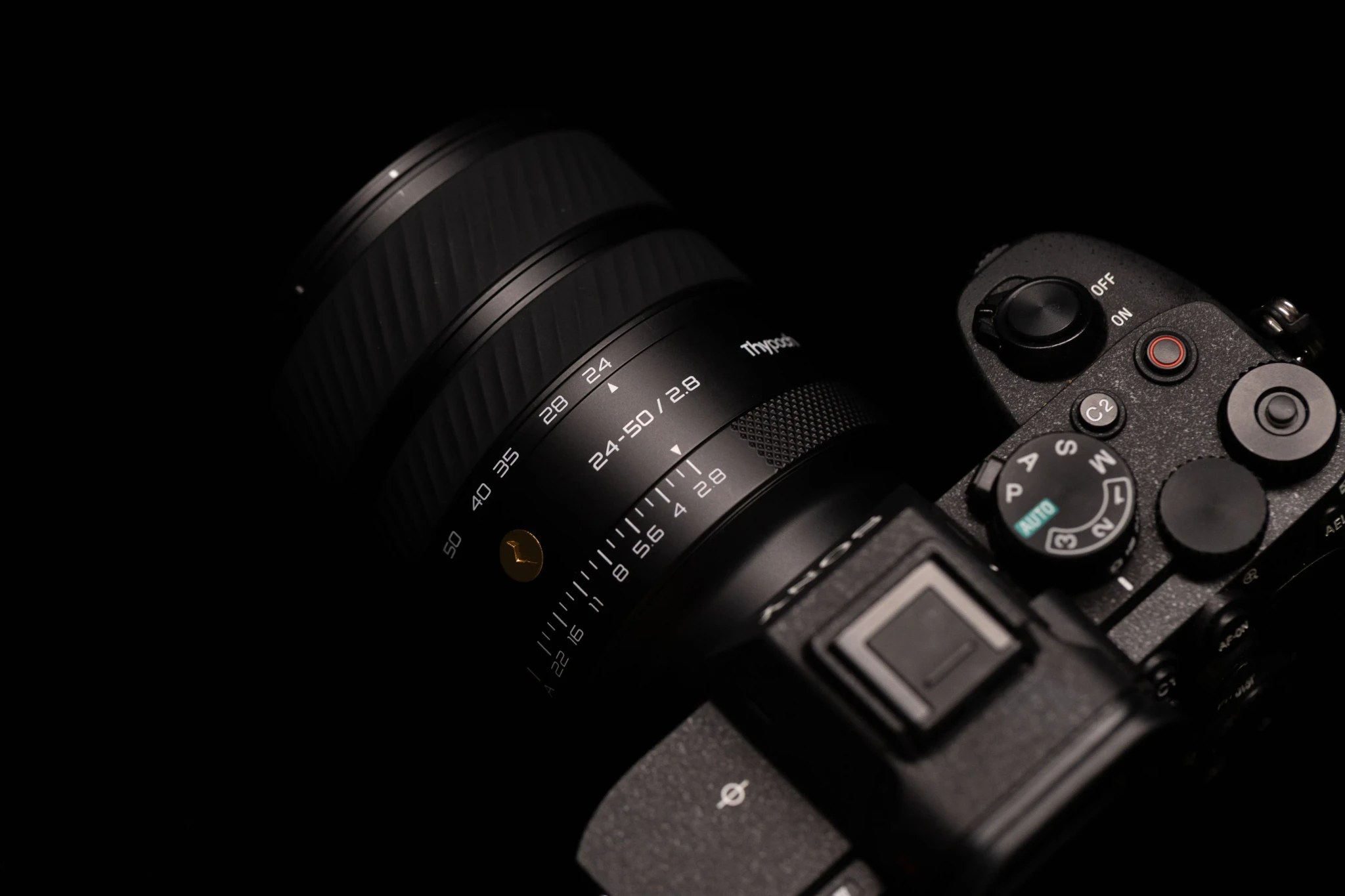
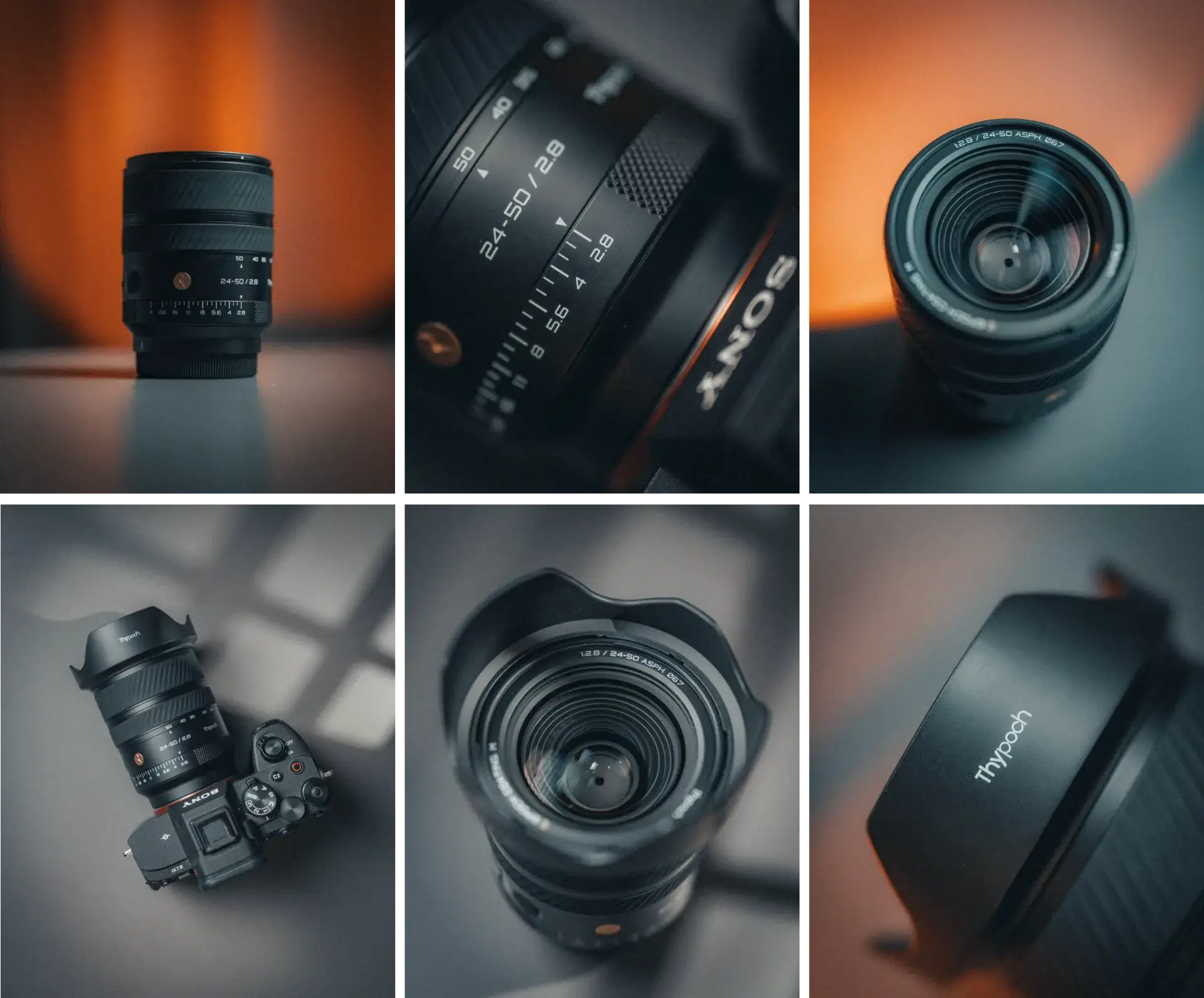
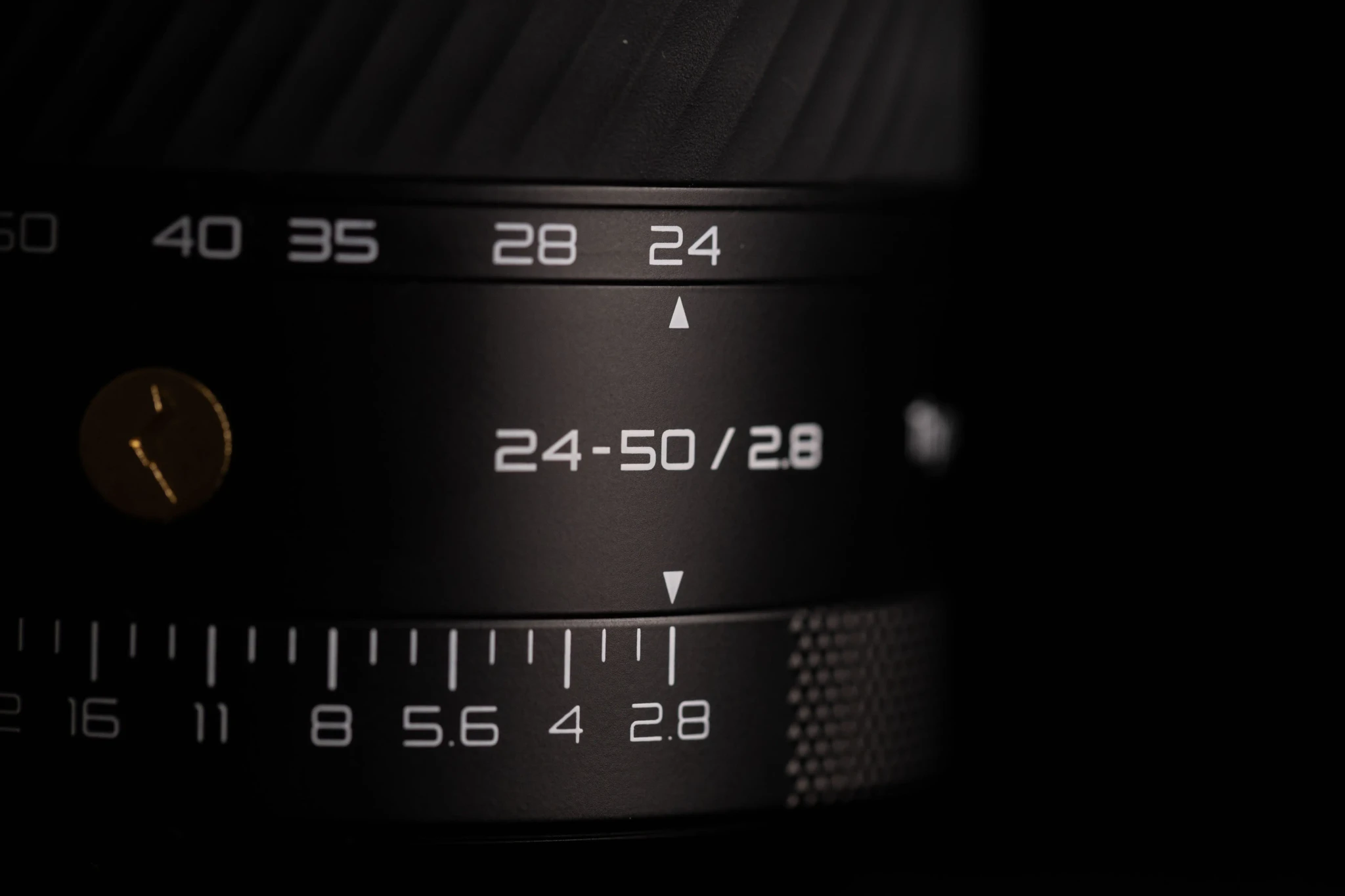
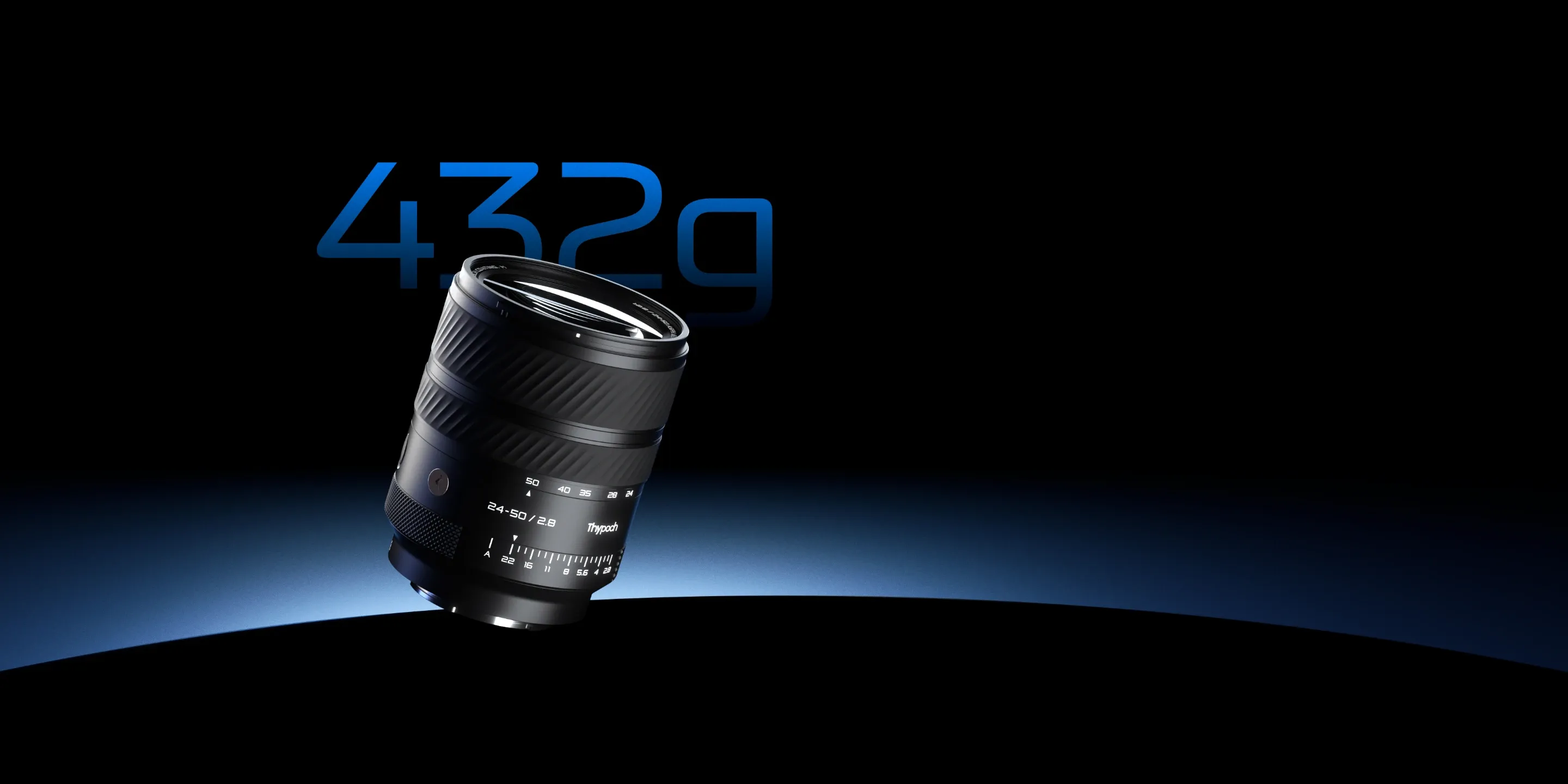
The concept is easy to understand: full-frame Sony E mount, 24-50mm range, constant f/2.8 aperture, autofocus, internal zoom, 67mm filter thread, compact size, and a listed weight of 432g.
Choose the Sony FE 24-50mm f/2.8 G if you want the safer first-party lens. Sony has the stronger track record for autofocus integration, body features, close-focus performance, and predictable behavior across Sony cameras.
Choose the Thypoch Voyager if value is the main issue. At major US retail pricing reviewed in May 2026, the Thypoch was roughly half the price of the Sony while offering a very similar headline setup. That price gap is the whole story.
Why Trust This Guide
This guide is written from a practical buying point of view: camera body fit, autofocus expectations, stabilization, gimbal balance, filter size, and whether the lens saves enough money to justify choosing a newer third-party option. FilmGear Canada works with Sony shooters who often need to decide whether a lens makes sense on cameras like Sony FX3, FX30, and FX6 before they build the rest of the kit around it.
Quick Answers Before You Buy
Is the Thypoch Voyager really a Sony 24-50 G alternative?
Yes, in concept. Both are compact full-frame Sony E-mount 24-50mm f/2.8 autofocus zooms. The Sony is still the safer first-party choice.
Is it worth buying if it costs roughly half as much?
It can be. If you want the 24-50mm f/2.8 idea and can accept a newer third-party autofocus lens, the Thypoch is hard to ignore. If missed focus would cost you money on paid work, Sony is safer.
Is 24-50mm enough range?
It is enough for travel, everyday carry, street, creator video, compact product content, and hybrid photo/video work. It is not a complete replacement for a 24-70mm if you often need tighter event or portrait coverage.
Does internal zoom matter?
Yes, especially for video and gimbals. Internal zoom helps the lens keep the same length and balance while you change focal length.
What do I give up by not buying Sony?
You give up first-party confidence: Sony body integration, proven G Lens performance, close-focus advantages, and better-known autofocus behavior.
Key Specs
| Spec | Thypoch Voyager 24-50mm f/2.8 |
|---|---|
| Product type | Full-frame autofocus standard zoom |
| Mount | Sony E |
| Focal length | 24-50mm |
| Aperture | Constant f/2.8 to f/22 |
| Image circle | 43.2mm full-frame |
| Optical design | 16 elements in 13 groups |
| Focus | Autofocus |
| Close focus | 0.3m from sensor plane |
| Max magnification | 0.216x listed by Thypoch |
| Filter size | 67mm |
| Length | 92.8mm |
| Weight | Approx. 432g |
| Iris blades | 10 |
| Stabilization | No optical stabilization listed |
| Video handling | Internal zoom and stable center of gravity |
| Weather note | Sealed critical points; not waterproof |
The Hidden Buying Reason: Avoiding A Bigger Lens Spend
Most buyers want to avoid wasting money. That is exactly why the Thypoch Voyager is interesting.
A 24-50mm f/2.8 lens can cover the range many Sony shooters use most often. 24mm handles rooms, travel, city scenes, establishing shots, and handheld video. 35mm handles street, documentary, product-on-table, and natural human-distance framing. 50mm handles portraits, details, food, products, and tighter everyday scenes.
That does not make a 24-50mm lens magic. It also does not replace a full 24-70mm for every job. But it can reduce the need to buy several small primes just to cover normal everyday shooting.
That is the real money-saving angle. If the Thypoch gets close enough to the Sony idea for a much lower price, the savings can go toward a small fast prime, ND filters, audio, lighting, a compact tripod, a gimbal, or travel.
What Buyers Usually Compare
The Thypoch Voyager is not being compared with random budget zooms. Most buyers will compare it directly with the Sony FE 24-50mm f/2.8 G.
That is fair. The focal range is the same. The aperture is the same. The mount is the same. The size and weight are close. Both use 67mm filters. Neither is listed with optical stabilization.
The decision is about confidence versus value. Sony is safer. Thypoch is cheaper. The right answer depends on how much risk the buyer can accept.
Thypoch Voyager vs Sony FE 24-50mm f/2.8 G
On paper, the two lenses are close. Both are full-frame Sony E-mount autofocus zooms with a 24-50mm range and constant f/2.8 aperture. Both use 16 elements in 13 groups. Both are around 92mm long and use 67mm filters. Both weigh a little over 400g.
Sony pulls ahead on first-party integration. Sony lists high-speed, high-precision, quiet autofocus with linear motors, focus breathing compensation support on compatible bodies, a focus hold button, aperture ring, aperture click switch, focus mode switch, dust and moisture resistance, and fluorine coating.
Thypoch fights back with price and internal zoom. It is the lens for someone who wants the Sony 24-50 idea but would rather keep more money in the budget.
| Buyer priority | Thypoch Voyager 24-50mm f/2.8 | Sony FE 24-50mm f/2.8 G |
|---|---|---|
| Lower current price | Wins | Costs substantially more |
| Native Sony confidence | Less proven | Wins |
| Focal range | 24-50mm | 24-50mm |
| Aperture | Constant f/2.8 | Constant f/2.8 |
| Weight | Approx. 432g | Approx. 440g |
| Length | 92.8mm | 92.3mm |
| Filter size | 67mm | 67mm |
| Optical design | 16 elements in 13 groups | 16 elements in 13 groups |
| Close focus | 0.3m | Sony lists stronger close-focus performance |
| Video handling | Internal zoom is a strong advantage | Compact and video-friendly |
| Best fit | Value-focused Sony creator | Sony-native paid hybrid shooter |
Is The Thypoch Really Half The Price?
At the time this draft was prepared in May 2026, B&H listed the Thypoch Voyager 24-50mm f/2.8 for less than the Sony FE 24-50mm f/2.8 G. The Sony listing showed instant savings and a higher crossed-out price.
That makes the Thypoch roughly half the current public retail price of the Sony. This should be checked again before publishing or promoting the article, because price gaps change quickly.
Who Should Buy The Thypoch Voyager?
Buy the Thypoch Voyager if you shoot Sony E mount and want a compact constant f/2.8 everyday zoom without paying Sony G pricing.
Buy it if your work is travel, street, family documentary, creator video, compact product content, light event coverage, or casual hybrid shooting where 24mm, 35mm, and 50mm cover most of your day.
Buy it if gimbal balance matters. Internal zoom is not a flashy feature, but it saves time when the camera is balanced and you want to change focal length without the lens extending.
Buy it if you are comfortable with a newer third-party autofocus zoom. The value is strong, but it should not be sold with the same confidence as a mature first-party Sony G lens until more real-world copies have been tested.
Who Should Buy The Sony Instead?
Choose Sony if you shoot paid work where autofocus reliability matters more than saving money.
Choose Sony if you rely on Sony body features, focus breathing compensation, high-speed tracking, quiet AF, and predictable first-party behavior.
Choose Sony if close focus is important. Sony's listed close-focus and magnification specs are stronger than the Thypoch specs reviewed for this article.
Choose Sony if you simply do not want to think about whether a third-party lens will behave perfectly with your camera body today and after firmware updates.
Who Should Choose Something Else?
Choose a 24-70mm f/2.8 if you need the classic professional event, wedding, interview, and commercial zoom range. A 24-50mm lens is compact, but it stops exactly where many shooters want more reach.
Choose a 20-70mm f/4 if you care more about wider coverage and reach than f/2.8.
Choose a fast prime if you shoot mostly in low light, want stronger subject separation, or usually work at one focal length.
Buying Mistakes To Avoid
Do not buy the Thypoch only because it is cheaper. Buy it because the compact 24-50mm f/2.8 idea fits how you actually shoot.
Do not expect it to replace a 24-70mm. Missing 50-70mm matters for portraits, events, compressed details, and some interview setups.
Do not assume third-party autofocus will match Sony in every camera and firmware situation. If AF reliability is business-critical, test before relying on it.
Do not overstate weather sealing. Sealed critical points are useful, but that does not make the lens waterproof.

Best Use Cases
Travel And Everyday Carry
This is the easiest use case for the Thypoch. It gives you a small full-frame f/2.8 zoom for wide scenes, food, interiors, portraits, quick video clips, and general walking-around work.
Creator Video And Gimbals
Internal zoom is the standout video feature. A lens that does not extend while zooming is easier to live with on a small gimbal.
Street And Documentary Work
The 24-50mm range feels natural for street and documentary shooting. You can move from context to people to details without changing lenses.
Hybrid Photo/Video Kits
For creators who shoot both stills and video, the Thypoch keeps the kit small while still offering f/2.8 exposure and autofocus. The key is to verify autofocus with your exact camera body.

What Else Do You Need With It?
Most video shooters should add a 67mm variable ND filter. If you shoot outdoors at f/2.8, ND is not optional for serious video work.
For video, think about the full kit: cage, top handle, compact monitor, audio, gimbal, and small light. The lens saves money only if the rest of the setup stays practical.
For travel, a small fast prime may still make sense. A 24-50mm f/2.8 zoom is useful, but it will not replace an f/1.4 or f/1.8 prime in very low light.
Where To Buy Thypoch Voyager In Canada
If FilmGear Canada carries the Thypoch Voyager 24-50mm f/2.8, it should be positioned as a compact Sony E-mount value alternative for creators, photographers, videographers, and travel shooters.
FilmGear Canada is based in Vancouver, BC and supports Canadian filmmakers, creators, production companies, studios, and owner-operators with professional camera, lighting, grip, audio, and lens gear.
FilmGear Canada also has a Vancouver gear showroom with demo units for many popular products. If you want to test a specific lens, camera body, filter, or gimbal combination, contact the team before visiting so they can confirm what is available to view.
Useful links:
FAQ
Is the Thypoch Voyager 24-50mm f/2.8 full-frame?
Yes. Thypoch lists the Voyager 24-50mm f/2.8 with a 43.2mm full-frame image circle.
Is the Thypoch Voyager autofocus?
Yes. Thypoch lists the Voyager 24-50mm f/2.8 as an autofocus lens for Sony E mount.
Is it better than the Sony FE 24-50mm f/2.8 G?
It is better on price. The Sony is better on first-party confidence, close-focus specs, and proven body integration.
Is 24-50mm enough for video?
Yes for travel, creator work, documentary coverage, gimbal shots, and everyday shooting. No if you regularly need tighter portrait or event coverage beyond 50mm.
Does the Thypoch have optical stabilization?
No optical stabilization is listed in the reviewed Thypoch specs. Sony's FE 24-50mm f/2.8 G also does not list optical stabilization. Stabilization will depend on your camera body and shooting setup.
Why would someone still buy the Sony?
Because reliability can be worth more than the price difference. If autofocus, body integration, and predictable performance matter more than savings, the Sony is the safer buy.
Is the Thypoch Voyager 24-50mm good for Sony FX3?
Yes, the Thypoch Voyager 24-50mm f/2.8 is a natural match for Sony FX3 buyers who want a compact full-frame E-mount zoom for video, travel, gimbal work, and everyday shooting. The main tradeoff is confidence: the Sony FE 24-50mm f/2.8 G is still the safer first-party choice if autofocus behavior and body integration matter more than saving money.
Is the Thypoch Voyager 24-50mm good for Sony FX30?
Yes, it can work well on Sony FX30, but remember that FX30 is a Super35 / APS-C camera. The lens still mounts directly because it is Sony E mount, but the 24-50mm range will feel tighter than it does on full-frame cameras like FX3 or FX6. For FX30 shooters, the Thypoch makes the most sense if you want a compact f/2.8 zoom and do not mind losing the wider full-frame feel.
Is the Thypoch Voyager 24-50mm good for Sony FX6?
Yes, it is a practical FX6 option if you want a small full-frame E-mount zoom and want to keep the camera package light. For paid work, the Sony FE 24-50mm f/2.8 G is still the more conservative choice because first-party autofocus behavior, controls, and long-term predictability may matter more on professional jobs.
Final Take
The Thypoch Voyager 24-50mm f/2.8 is a direct value challenge to the Sony FE 24-50mm f/2.8 G. It gives Sony shooters a very similar everyday lens idea for much less money.
The Sony remains the safer recommendation for paid work. The Thypoch is the more interesting value pick. If your priority is saving money without giving up the compact 24-50mm f/2.8 concept, the Thypoch deserves a serious look.
Share:
DZOFilm Arcana vs Pavo vs Blazar Viper: Which Anamorphic Lens Should You Buy?
Aputure STORM 80c Review: Compact Full-Color Light for Creators & Filmmakers